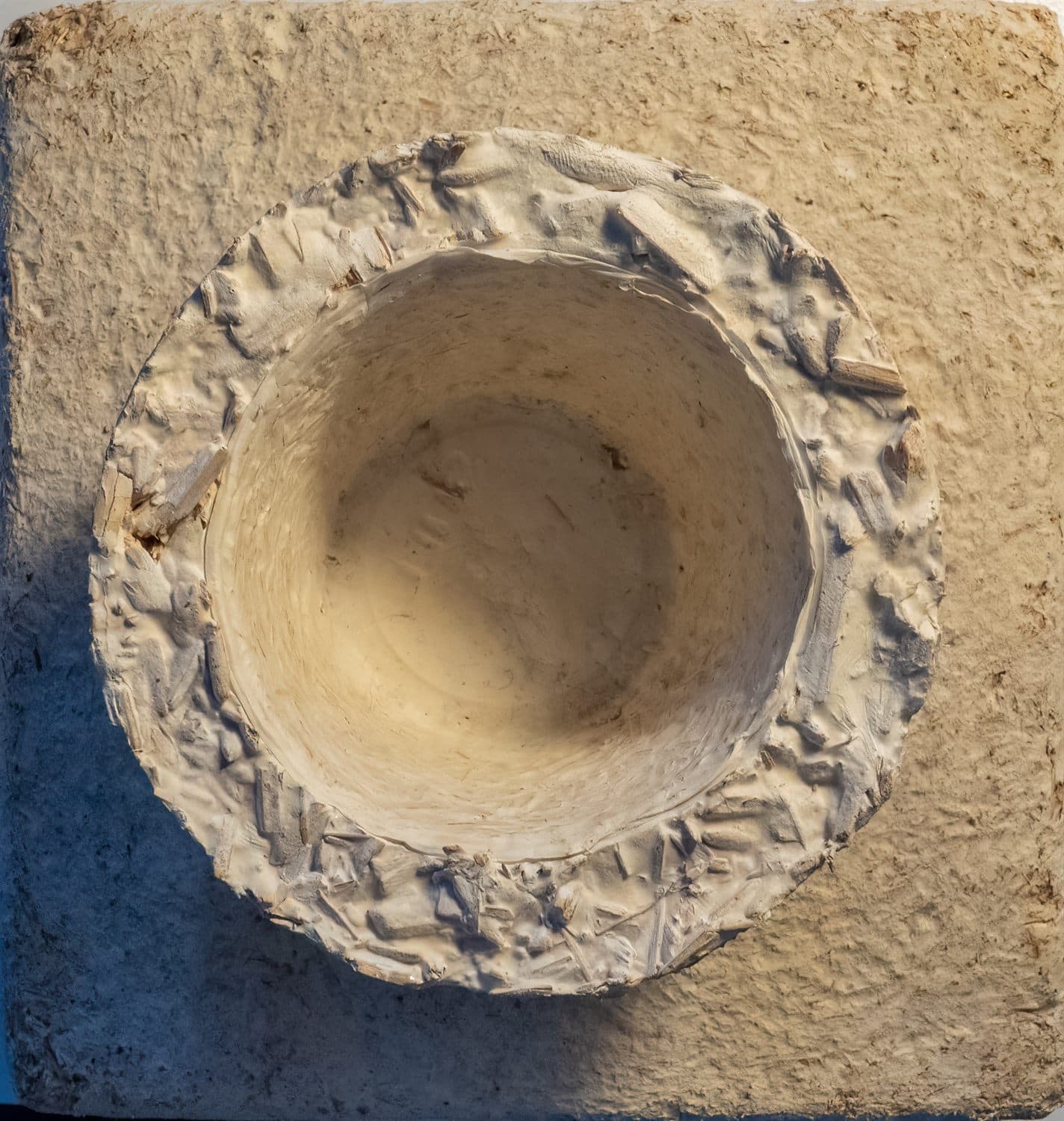
Mycelium composite
Grown, not extracted.
graduate design research · healthy materials lab, parsons
Graduate research · ConceptGraduate capstone · Fall 2025 · Rishabh Salian & Henry Schroder
§ 01 · the frame
We have so many exciting materials. Why do they rarely make it past the exhibition wall?
Already real, already buyable
Grown, not extracted.
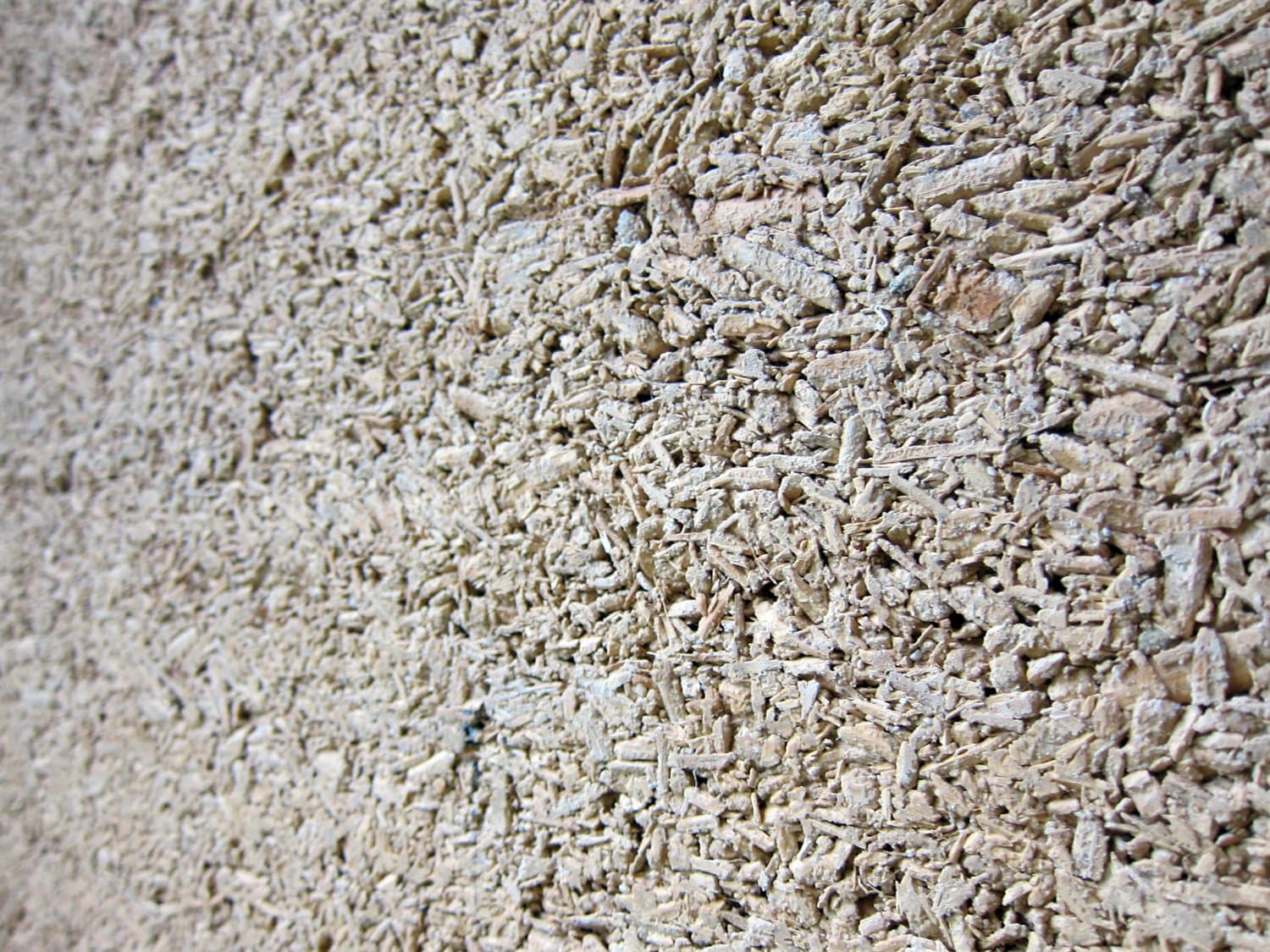
Carbon-storing, breathable.
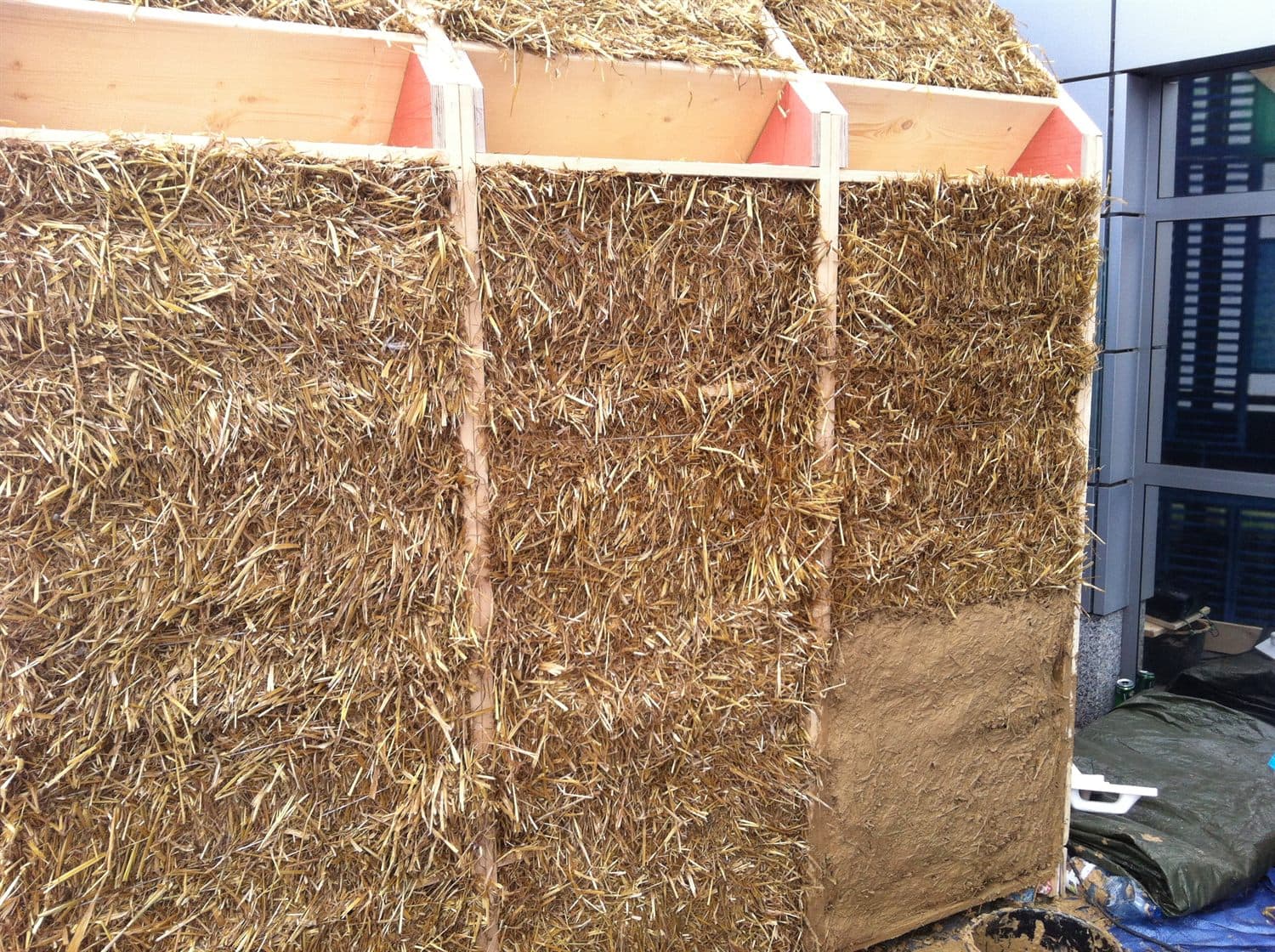
Ag by-product → insulation.
Buildings and construction are responsible for around 37% of global energy-related CO₂ emissions.1 We spent a semester with the Healthy Materials Lab at Parsons, a research and education center that promotes healthier building materials through its materials library, partnerships, and training.
This was a two-person capstone with Henry Schroder; the field visit, interviews, and synthesis were shared. My focus, and the part I'd build first, is the intervention this page ends on: Healthy Materials Packages.
Research question
How might we increase the adoption of innovative low-carbon materials in construction?
Not lab prototypes: materials that meaningfully cut embodied carbon and can already be specified and bought today.
1 UN Environment Programme, Global Status Report for Buildings and Construction. · Material close-ups via Wikimedia Commons (CC BY / CC0); field photos are the author's.
§ 02 · the timeline
Fall 2025, start to finish.
What this is not: a longitudinal field study. One field visit and three practitioner interviews point to where adoption stalls; the contractor and manufacturer interviews are still ahead.
Mixed methods on a deliberately small scope: a desk-research spine plus four primary engagements (a materials-library field visit and three practitioner interviews), read for where adoption stalls, not to measure attitudes.
§ 03 · field visit
A library you pull open drawer by drawer: every material catalogued, tagged, and ranked for health and carbon.
Drag or swipe · tap a photo to enlarge
Field visit · Donghia Healthy Materials Lab, Parsons School of Design · Oct 2025.
§ 04 · where adoption breaks, and where it turns
We mapped everything we learned onto the life of a project: before, during, and after construction. That journey map became the framework: it shows exactly where healthy materials fall out, and where the process could turn. The quotes are the evidence.
owner goals · RFPs · specification
Owner awareness & priorities: healthy materials asked for early, in RFPs, standards, and goals.
Standard creation & testing: shared tests and spec language make "experimental" materials normal options.
PM training & planning: simple tools let PMs plan for healthy materials from the start.
“In more novel systems like in the hemp area, there weren't any standard specifications in any of the building codes.”
Alison Mears, Director, Healthy Materials Lab
bidding · procurement · substitution
Contractor-controlled decisions: training and substitution guidance flip a common blocker into a key driver.
Supply transparency: quick, trusted information on available, tested products makes healthier picks feel less risky.
“It's the cold truth of construction. They will never spend more; they will only do it if they have to.”
Omir Majeed, Project Manager, CBRE
occupancy · outcomes · the next project
Proof compounds awareness: every project that documents its materials and outcomes creates the market force that makes the next owner ask. The cascade loops back to the start.
“If I'm not aware, I don't know to ask. If I'm aware, I create a market force that encourages better materials.”
Alison Mears, Director, Healthy Materials Lab
§ 05 · from insight to intervention
Three concepts came out of this, each attacking a different point where healthy materials fall out.
Walk through NYC rentals and the interiors repeat: the same floors, paints, cabinets. Which told us these units already run on de-facto packages; nobody chose them for health. That's where Healthy Materials Packages came from, and affordable housing is where they'd matter most: the cost pressure is highest and the same scopes repeat at scale.
Pre-assembled spec packages for common NYC interior scopes (unit renovation, corridor, lobby, bathroom) that swap in vetted healthier / lower-carbon materials, with a simple cost + maintenance + carbon comparison to “business as usual.” It attacks cost fear at the earliest spec stage and keeps healthy options as the default instead of being value-engineered out.
Builds on HML's curated collections and NYC's Enterprise Green Communities Criteria.
A simple dashboard where project teams see approved suppliers, product health/carbon data, lead times, and safe substitutions per material category.
Builds on mindful MATERIALS' Common Materials Framework and the HPD public repository.
Sample boards, step-by-step install cards, short safety videos, and a “substitution playbook” of pre-approved healthy alternatives for when something is out of stock.
Builds on HML's education programs and LEED low-emitting-materials guidance.
§ 06 · the intervention, made tangible
Pick a scope. Keep or reject each swap. Watch cost, carbon, and health recompute.
Flip on the cost-pressure lens to see which lines a value-engineering pass would attack, and the defense each one carries. The built-in assistant answers from the package you've configured. Illustrative data throughout.
Paste your current finish schedule, one material per line. The system matches each line against its library of tried-and-tested healthier swaps.
Keyword matching over a 20-line illustrative library; a real system would parse full spec documents.
Healthy, low-carbon materials are here. The question is whether our processes will let them in.
A personal lesson from this one: stick to what you're good at, and focus on practical improvements rather than industry-wide disruption. If I take it further, I start with the packages: the smallest intervention aimed at the biggest blocker, cost fear, at the exact moment specs get written. Next: the contractor and manufacturer interviews, then the final affinity mapping.
With Henry Schroder · Healthy Materials Lab, Parsons School of Design.