External Engagement Studio · MS Strategic Design & Management, Parsons · Spring 2025
The People pillar: attracting and keeping Housing Works’ next generation
Housing Works runs on a three-year strategic plan with three focus areas: People, Programs, and Innovation. We were brought in on People, covering staff and board recruitment, retention, and flexibility, with the goal of making Housing Works the employer and Board home of choice for the next generation. Within that, we narrowed to one question: how can Housing Works attract and keep younger staff when it can’t match private-sector pay?
§ 01 · The brief
Housing Works funds HIV and homelessness services through a chain of thrift stores and a bookstore. It can’t pay what companies pay, and Gen Z will soon be about a third of the workforce. The Studio paired our team with Housing Works to work its People pillar; we focused on younger staff specifically.
Our team of three (Sharka, Pani, and me) split the work. Mine was the economic and competitive analysis, the survey statistics, and one of the three frameworks we delivered: a system for trustee-led workshops.
§ 02 · The semester
Fifteen weeks, from meeting the partner to handing over the strategy.
Week numbers are approximate; the studio ran fifteen weeks, spring 2025, from the partner brief to the final strategy.
Funded by what it sells.
§ 03 · How we worked
We worked in four passes, and listened before we proposed anything.
One caveat up front: we couldn’t survey Housing Works’ own younger staff directly, so the Gen Z fieldwork ran as analogous research, with students across The New School standing in for the generation Housing Works wants to attract and keep.
- 01
Their documents first.
We read Housing Works’ FY23–25 strategic plan, its FY23 financial audit, and its org charts to understand the business and where pay actually sat. Alongside that we ran a competitor analysis and a short literature review on nonprofit hiring and retention.
- 02
The sites.
We visited four Housing Works locations to see the work first-hand: a thrift store, the cannabis dispensary, the Keith Cylar health center, and the bookstore.
- 03
The people.
We interviewed staff across roles, including a harm-reduction coordinator and the development team, and sat in on calls with Housing Works.
- 04
Gen Z directly.
We ran an interactive poster survey across campus (127 responses) and a “Bridges & Barriers” workshop, then clustered what we heard into a short set of findings.
§ 04 · From the site visits
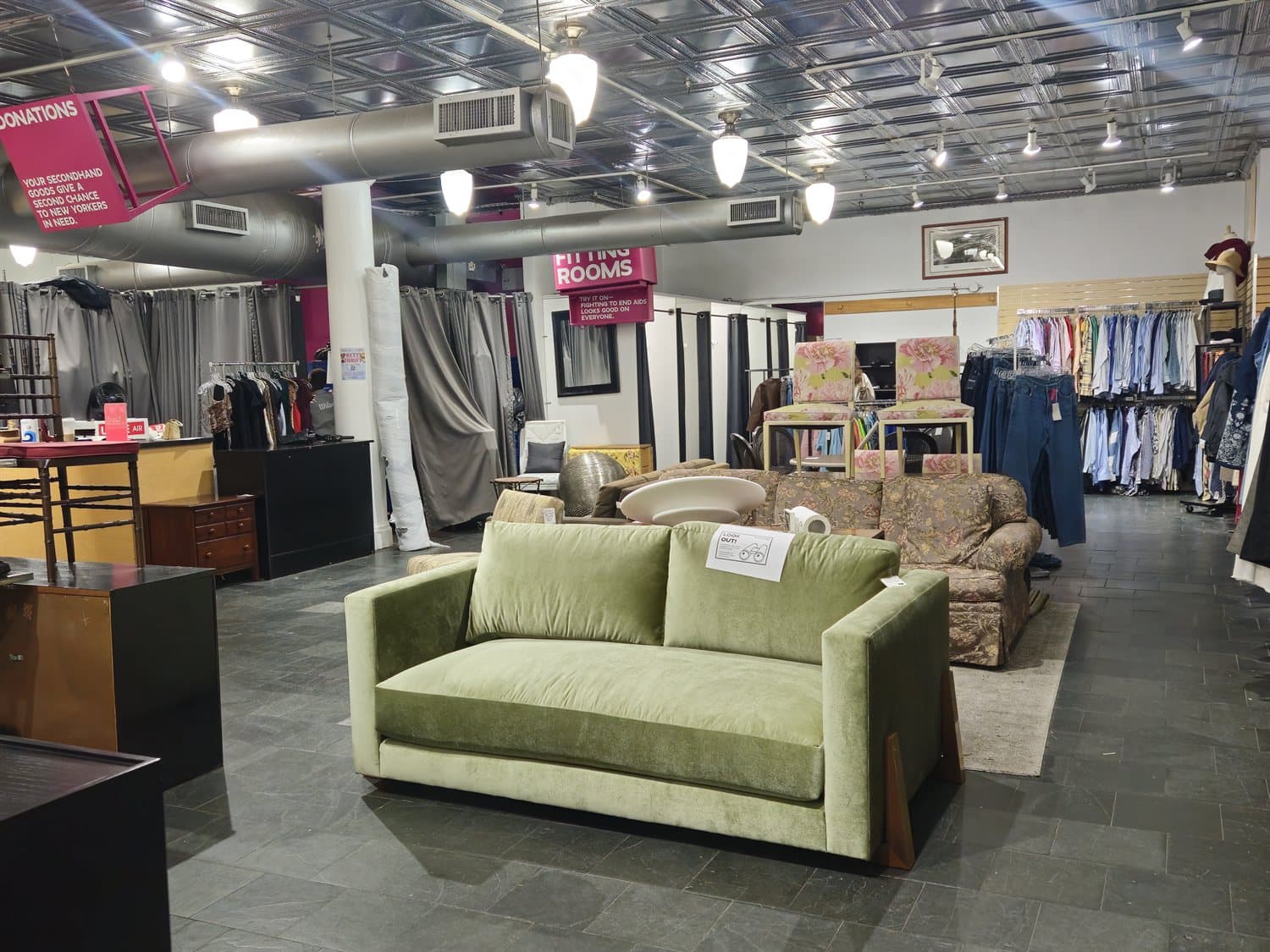
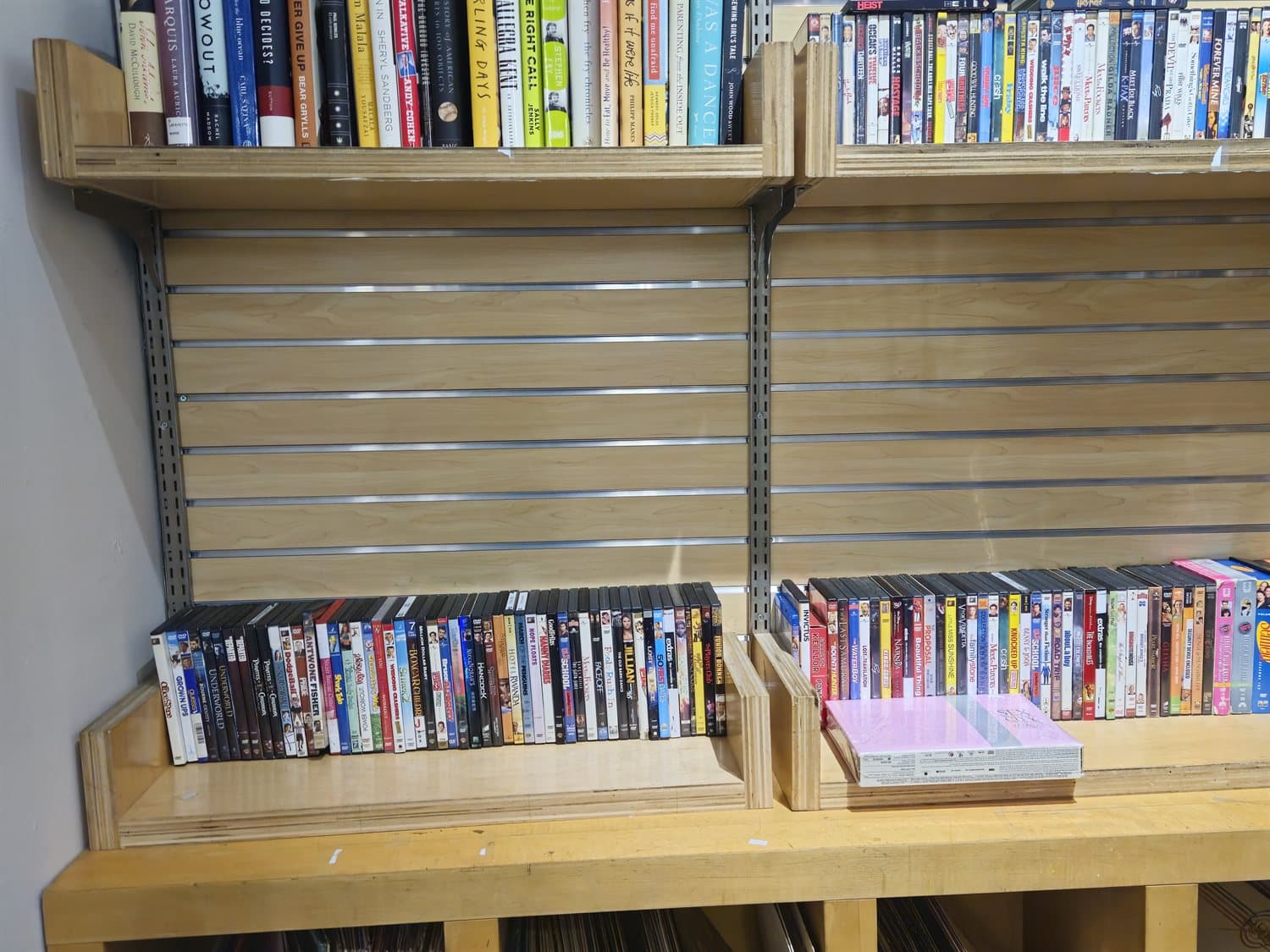
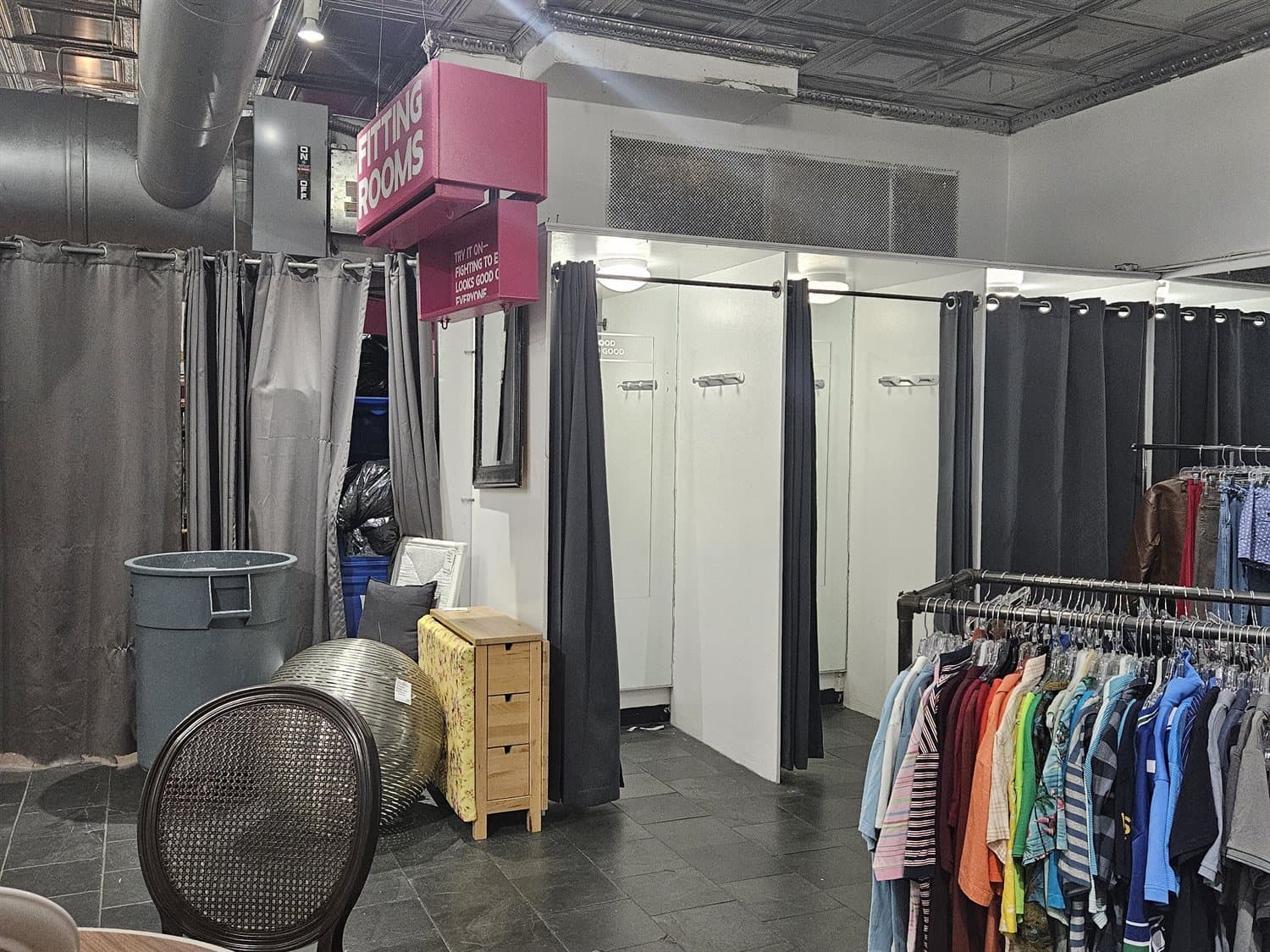


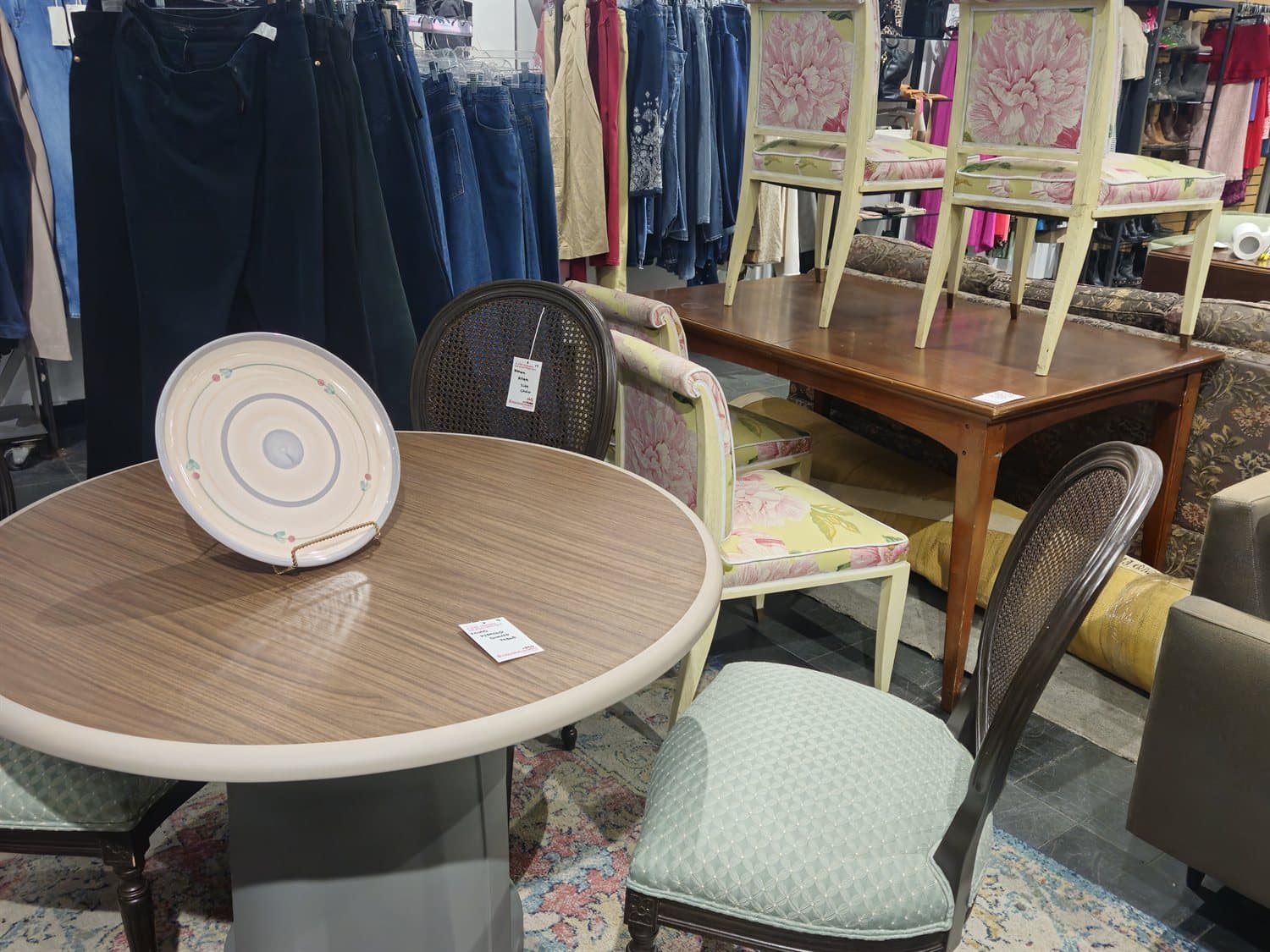
Workshop 01 · the Gen Z poster survey
We asked Gen Z directly, in their own space.
Three campuses, six posters, ~127 sticky-note responses.
Rather than guess what younger workers want, we ran a participatory poster survey across three New School campuses: the University Center, the List Center, and the NSSR Library. Each board led with a provocative statistic and one open question; passersby, mostly students, wrote or drew straight onto a sticky-note grid.
Over about two weeks we gathered roughly 127 responses, and the posters that named “Gen Z” out loud drew the most. The framing itself pulled people in.
The posters · moving through all six
Drag or swipe · tap a poster to enlarge
From our Spring 2025 participatory poster survey at The New School. The cards show the real posters and real responses, lightly trimmed. The sharp headline on each board earned the attention; the insight on each card is what people’s answers actually said.
§ 05 · Workshop 02 · Bridges & Barriers
Mapping the bridges and the barriers.
Six students, a four-level tree, an effort-vs-engagement matrix.
In a sixty-minute in-person workshop, we sat six Gen Z students down to map the workplace from the ground up. On a four-level tree (volunteers at the roots, staff on the trunk, managers on the branches, leaders in the canopy) they marked the barriers younger staff hit, then the “bridges” that could carry them over.
Every proposed fix went onto an effort-versus-engagement matrix, so the high-impact, low-effort moves rose to the top. Recognition kept beating pay. Unclear career paths came up again and again, and even a TV in the break room landed as an easy win.
Those signals fed straight into our findings and proposals, especially the trustee-led workshops, where participants ranked clear career paths and mentorship as what would keep them.
How the session unfolded · tap a frame to enlarge
What it pointed to
Two workshops, the same signals. We clustered what we heard into the four findings below.
§ 06 · What we found
Four patterns came up again and again, and each one echoed something Housing Works had already named in its People plan. None of them were about money.
Flexible scheduling read as respect. Where it was applied unevenly, staff noticed. The problem was inconsistency, not the technology.
Staff wanted to be acknowledged, not only paid. As one put it: “It’s not even just about the pay. It’s also about being acknowledged.”
What mattered most wasn’t the outcome but whether the rules were applied consistently and explained. Even-handed processes built more trust than perks did.
Younger staff couldn’t see the next role or how to reach it, while the board’s professional expertise sat unused.
§ 07 · What we proposed
We gave Housing Works three low-cost frameworks it could adopt without new headcount. Each answered one of our findings and mapped onto a goal Housing Works had already set in its People plan:
Hybrid Work Charter
Sharka
Gives shape to the plan’s aim to design a model for the new flexible workplace, applied consistently across roles.
Skill-Badge Passport
Pani
Serves the plan’s call for a culture of appreciation, acknowledgement, and connection, using recognition and surplus stock.
Trustee Workshops
me
Acts on the plan’s commitment to offer training and development to Board members and managers, and on its promise that it’s not just a job, it’s a career.
Together they cost under $2,700 a year.
My framework: trustee-led workshops
The system matches a staff development need against a trustee’s skills and Housing Works’ strategic priorities, then turns the match into one structured 45-minute session. Every session is recorded, summarized, and archived: what’s taught stays with the team. Its share of the three-framework budget is $900 a year.
Below: the working version, as the People team would use it.
- 01Pick a need
- 02Match a trustee
- 03Review the lesson plan
- 04Schedule
Open staff needs
From the quarterly pulse survey. Pick one to see the matcher work in the open.
§ 08 · Limitations
A few honest caveats. As flagged up front, the Gen Z research was analogous and leaned toward design students; the workshop was a single session; and these are proposals Housing Works hasn’t piloted yet. We’d suggest testing the workshops in one store before scaling them across the organization. We used AI tools to help with analysis and drafting; the fieldwork, the findings, and the decisions are ours.